
Books, podcasts and movies ...
[Sharing some inspiring pieces]
A Sand County ALMANAC
Aldo Leopold
In A Sand County Almanac, Aldo Leopold writes with the steady patience of someone who has spent a lifetime paying attention. First published in 1949, the book begins quietly: a year observed month by month on a worn Wisconsin farm. Geese return in March. A skunk crosses snow in February. Oaks are cut, counted, remembered. The entries are intimate, grounded, unhurried.
At first glance, these seasonal sketches seem simple — field notes shaped into essays. But gradually they deepen into something far more consequential. Leopold expands outward from local observation to broader reflections on conservation, land use, wildlife policy, and human responsibility. The culmination is his articulation of the “land ethic”: the idea that humans are not masters of the land, but members of a broader community that includes soils, waters, plants, and animals. Ethics, he argues, must extend beyond human relationships to the biotic community itself.
The tone is lucid, restrained, and morally steady. Leopold does not shout. He does not dramatize ecological damage. Instead, he persuades through clarity and humility. His prose is elegant without ornament, scientific without being detached, reflective without drifting into sentimentality. There is a quiet authority in his voice as an Ecologist — the authority of someone who has cut trees, restored prairie, watched species decline, and changed his mind over time.
One of the book’s most powerful qualities is its calm radicalism. In 1949, the idea that land itself deserved ethical consideration was revolutionary. Today, it feels prophetic. In the context of our current environmental crises — biodiversity collapse, climate instability, soil degradation, ocean acidification — Leopold’s words land with renewed urgency. He wrote before climate change dominated headlines, before plastic gyres and mass extinctions became common vocabulary. Yet the moral gap he identified remains the same: our technical capacity has outpaced our ethical evolution. This book offers something deeper — a shift in perception. It invites readers to see land not as property, resource, or backdrop, but as a living community to which we belong. That shift, if taken seriously, has profound implications for agriculture, conservation, urban planning, and even personal daily choices.
Its impact today lies in its steadiness. In a world of alarm and polarization, Leopold models a different kind of environmental voice — attentive, ethical, rooted in observation rather than outrage. The book suggests that meaningful change begins with learning to see properly. Reading it now feels less like revisiting a classic and more like returning to unfinished work.
The Art from Charles W. Schwartz, -who deserves reviews on his on with prolific publications of nature illustrations- is superb. Enjoy the read!


BELOVED BEASTS
Fighting for life in an age of extinction
Michelle Nijhuis

*Beloved Beasts* by Michelle Nijhuis is a beautifully woven, thought-provoking exploration of the history of modern conservation. Far more than a collection of success stories, the book takes an honest look at the complexities, contradictions, and evolution of the conservation movement through the lives of those who shaped it. Nijhuis masterfully brings historical figures to life, from early advocates like William Temple Hornaday and Rosalie Edge to modern champions of biodiversity. She doesn’t shy away from examining their flaws and biases, reminding us that the path to protecting nature has often been tangled with colonialism, privilege, and narrow perspectives. Yet, it’s this nuanced approach that makes *Beloved Beasts* so compelling—it celebrates progress without romanticizing the past. What stands out most is how Nijhuis connects history to the present, showing how the work of conservationists, scientists, and local communities continues to evolve. She highlights the importance of inclusive, community-driven efforts and reminds us that protecting wildlife ultimately means protecting ecosystems, cultures, and livelihoods. This book is both sobering and hopeful, urging readers to embrace a more thoughtful, equitable approach to conservation. For anyone passionate about nature and sustainability, *Beloved Beasts* offers a rich, eye-opening journey into the heart of what it truly means to protect life on Earth.
LAST CHANCE TO SEE

Douglas Adams and Mark Carwardine
This book is a rare and brilliant blend of humor, adventure, and deep ecological insight. What begins as a journey to document some of the world’s most endangered species quickly becomes a poignant reflection on humanity’s relationship with the natural world—one filled with both absurdity and awe.Adams, best known for The Hitchhiker’s Guide to the Galaxy, brings his signature wit to encounters with species like the bumbling kakapo and the elusive baiji river dolphin, while Carwardine, a dedicated zoologist, provides the scientific grounding. Together, they create a narrative that is both wildly entertaining and profoundly sobering. The humor never undercuts the urgency of the subject; instead, it makes the loss of these creatures feel even more personal, as if we’re not just witnessing extinction but losing something irreplaceable from the world’s character.What makes Last Chance to See so powerful is its ability to inspire without preaching. It reminds us that conservation isn’t just about saving animals—it’s about preserving the intricate and often bizarre web of life we’re a part of. Even decades after its publication, the book remains a call to action, urging us to care, to laugh, and most importantly, to act before it’s too late.
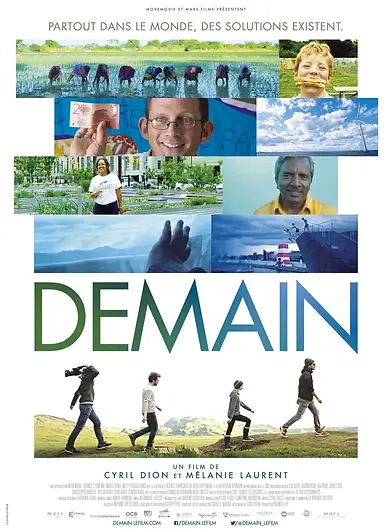
DEMAIN (TOMORROW)
by Cyril Dion and Mélanie Laurent
This movie is a rare gem among environmental documentaries—one that leaves you feeling inspired rather than overwhelmed. Instead of dwelling on doom and gloom, the film takes a refreshing approach: uncover practical, community-driven solutions to the planet's most pressing challenges.
From sustainable agriculture in France to renewable energy projects in Copenhagen, alternative education systems in Finland, and innovative economies in India, *Demain* highlights how people are already shaping a better future. The storytelling feels personal and hopeful, driven by genuine curiosity rather than preaching. Dion and Laurent’s conversations with activists, farmers, educators, and entrepreneurs remind us that change often starts small but can ripple outward in powerful ways.
What truly sets *Demain* apart is its emphasis on interconnectedness—how food, energy, economy, democracy, and education are all part of the same ecosystem. It’s less a documentary about problems and more a roadmap for possibility, showing that sustainability isn’t just about protecting the planet but about creating healthier, more resilient communities.
Watching *Demain* feels like a much-needed breath of fresh air—a reminder that while the challenges ahead are real, so are the solutions. It leaves you not just thinking, but wanting to act.